Introduction:
The history of printing is a fascinating tale that spans centuries, marking significant milestones in human communication and knowledge dissemination. From ancient methods of reproduction to the revolutionary invention of the printing press, this journey through history highlights the transformative power of print in shaping civilizations and cultures.
- Ancient Reproduction Techniques:
The roots of printing can be traced back to ancient civilizations where various cultures developed methods of reproducing written information. In ancient China, around the 9th century, woodblock printing emerged as an early form of mass reproduction. Text and images were carved onto wooden blocks, inked, and pressed onto paper or fabric. This technique spread to Korea and Japan, contributing to the dissemination of religious texts and artwork.
- Moveable Type in East Asia:
In the 11th century, China experimented with moveable clay type, a system where individual characters could be rearranged for different print jobs. However, due to the complexity of the Chinese writing system, the practicality of this method was limited. It wasn’t until the 13th century in Korea that metal moveable type was developed, allowing for greater flexibility and efficiency in printing.
- The Gutenberg Press: A Revolution in Europe (15th Century):
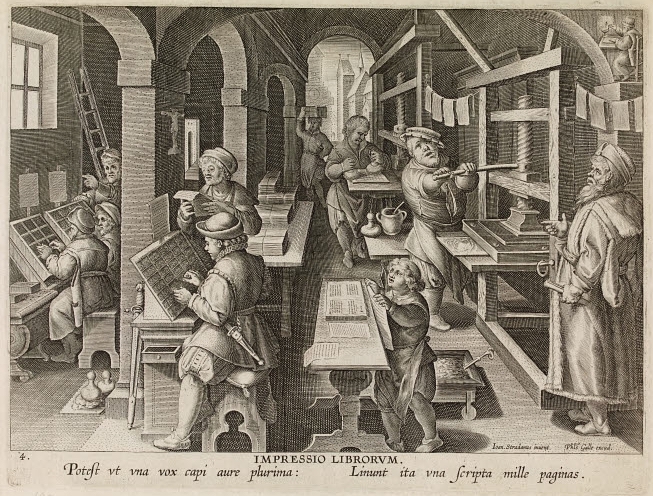
The most significant leap forward in printing technology occurred in 1440 when Johannes Gutenberg, a German inventor, introduced the printing press to Europe. This revolutionary device utilized movable metal type, making it possible to produce books and documents at an unprecedented speed. Gutenberg’s Bible, printed around 1455, is often regarded as the first major book printed with movable type, marking the beginning of the printing revolution.
- The Spread of Printing Across Europe:
The Gutenberg press quickly spread throughout Europe, transforming the way information was shared. Printing houses sprang up in cities such as Venice, Paris, and London. The accessibility of printed materials played a crucial role in the Renaissance, facilitating the exchange of ideas, scientific discoveries, and artistic innovations.
- The Rise of Newspapers and Periodicals:
In the 17th century, the printing press evolved to meet the growing demand for news and information. Newspapers and periodicals became popular, providing a means for the public to stay informed about current events. This shift in printing’s purpose had a profound impact on politics, society, and the concept of a well-informed citizenry.
- Industrial Revolution and Technological Advances:
The 19th century witnessed further advancements in printing technology during the Industrial Revolution. Steam-powered presses and innovations like the cylindrical press increased the speed and efficiency of the printing process. This era also saw the development of photography and lithography, expanding the possibilities for visual content in printed materials.
- 20th Century: Printing in the Modern Age:
The 20th century brought about even more transformative changes with the advent of offset printing, phototypesetting, and digital printing. These technologies made printing more accessible and allowed for faster and more cost-effective production. Desktop publishing in the latter half of the century democratized the creation of printed materials, enabling individuals and small businesses to design and produce their publications.
Conclusion:
The history of printing is a testament to humanity’s relentless pursuit of efficient and widespread communication. From ancient techniques in Asia to Gutenberg’s press and the digital printing age, the evolution of printing has shaped the way we share knowledge, disseminate information, and connect with one another. As we continue to embrace new technologies, the legacy of printing remains a vital thread in the fabric of human progress.
Leave your comment to Cancel Reply