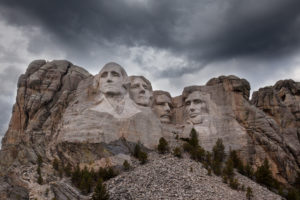
Mount Rushmore National Memorial, Black Hills region of South Dakota, USA. Famous american symbol
American history is a rich tapestry woven with the threads of triumphs, challenges, and the continuous pursuit of freedom and equality. Beginning with the indigenous peoples who inhabited the continent long before European exploration, the narrative unfolds with the arrival of settlers seeking religious freedom and economic opportunity.
The American Revolution marks a pivotal moment as the thirteen colonies fought for independence, ultimately giving birth to the United States in 1776. The Constitution, drafted in 1787, laid the foundation for a unique experiment in democracy. The young nation expanded westward, encountering both manifest destiny and the profound struggles of Native American displacement.
The 19th century brought seismic shifts, from the Civil War and the abolition of slavery to westward expansion and the industrial revolution. The Gilded Age witnessed economic growth alongside social inequalities, setting the stage for progressive reforms in the early 20th century.
America emerged as a global power following World War I and played a pivotal role in World War II. The post-war period saw the rise of the Cold War, the Civil Rights Movement, and significant social and cultural transformations.
The latter part of the 20th century witnessed the space race, the Vietnam War, and the information age, solidifying America’s position as a global leader. Contemporary history is marked by ongoing struggles for civil rights, social justice, and the evolving role of the United States in a rapidly changing world.
American history is a testament to resilience, progress, and the ongoing pursuit of the ideals articulated in the nation’s founding documents. It’s a story of diverse voices, complex narratives, and a nation continually striving to form a more perfect union.